Born in Belgium in 1971, Arne Quinze’s artistic journey began in the unspoiled landscapes of his rural childhood. That early, visceral connection to nature laid the foundation for a lifelong fascination with organic systems, biodiversity, and the rhythms of wild growth. But a major shift occurred when his family relocated to the city in the 1980s. Immersed in street art, the raw pulse of the digital music revolution, and the stylized energy of Japanese manga and anime, Quinze began forging a hybrid language—one that sought to bring the vibrancy and unpredictability of nature into the cold grids of urban space.
This hybrid impulse drives his multidisciplinary practice today, spanning oil painting, ceramics, Murano glass, phosphor bronze, aluminium sculptures, and monumental public installations. Quinze’s work is not simply aesthetic; it is a philosophical confrontation with the systems that shape us. At the heart of his vision lies a deep concern: we have not only ignored the beauty of nature—we have failed to learn from its most vital quality—diversity.
In contrast to human systems, which increasingly seek order, sameness, and control, nature thrives on divergence. From flamboyant flowers to iridescent insects, in the wild, the boldest forms often hold the greatest power. Quinze believes this celebration of difference is not just beautiful—it is essential. “We need diversity to succeed as a species on this planet,” he states.
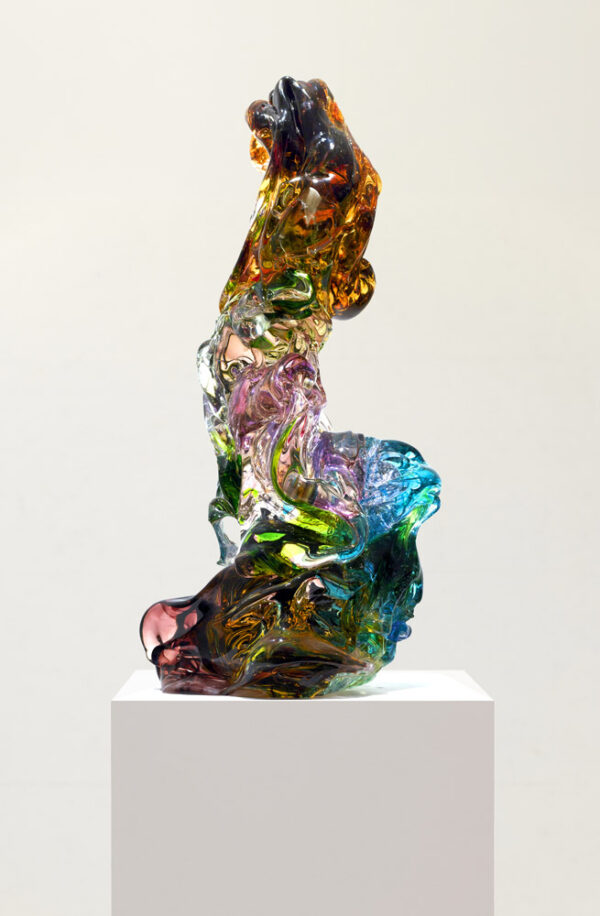
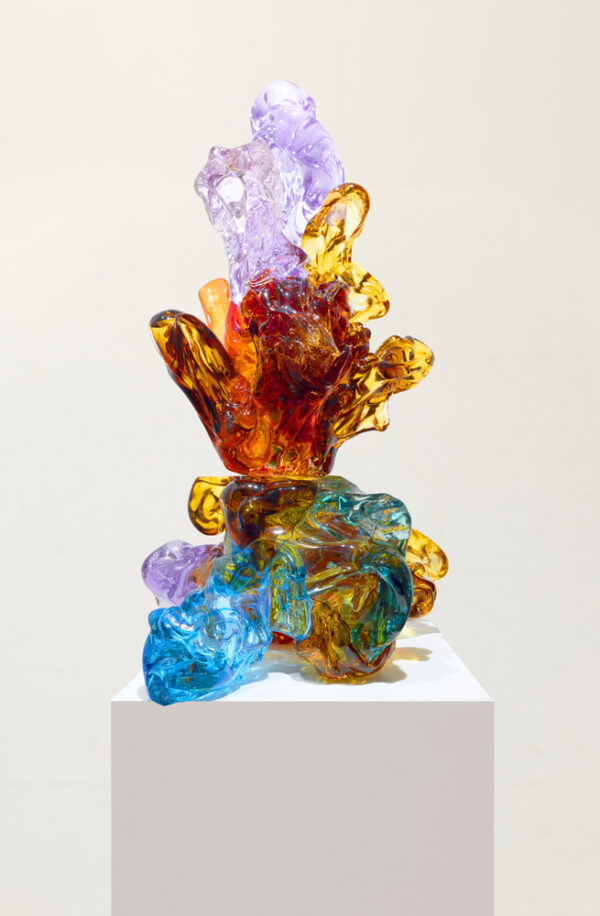
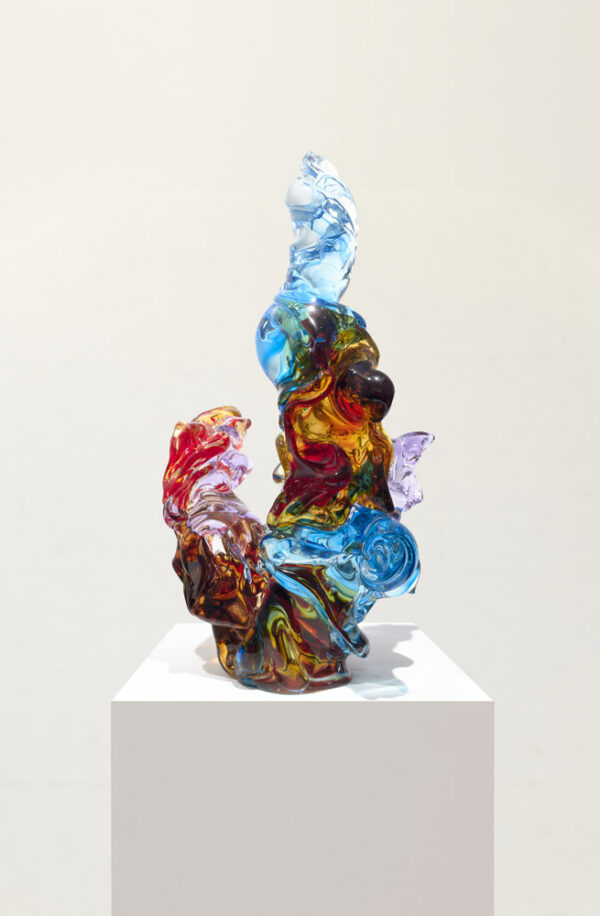
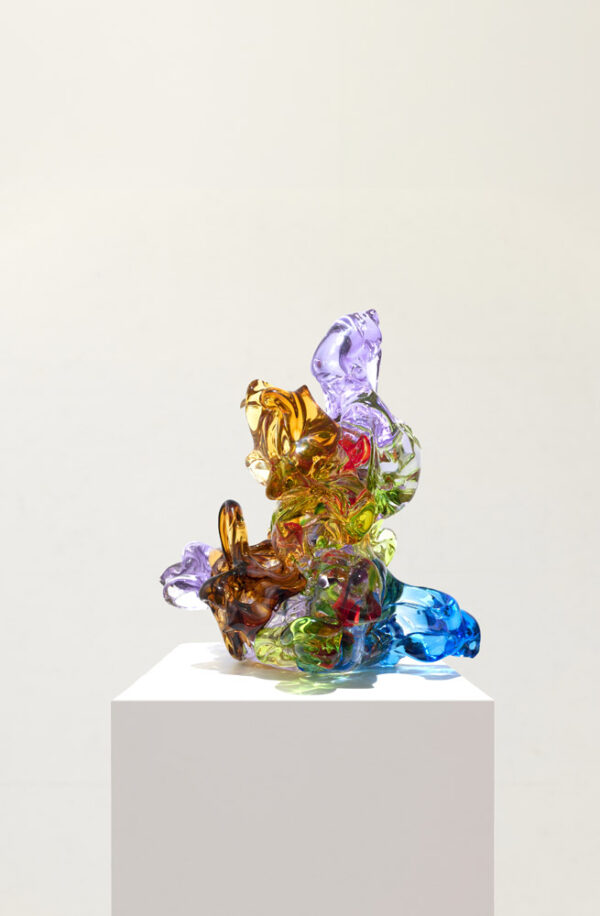
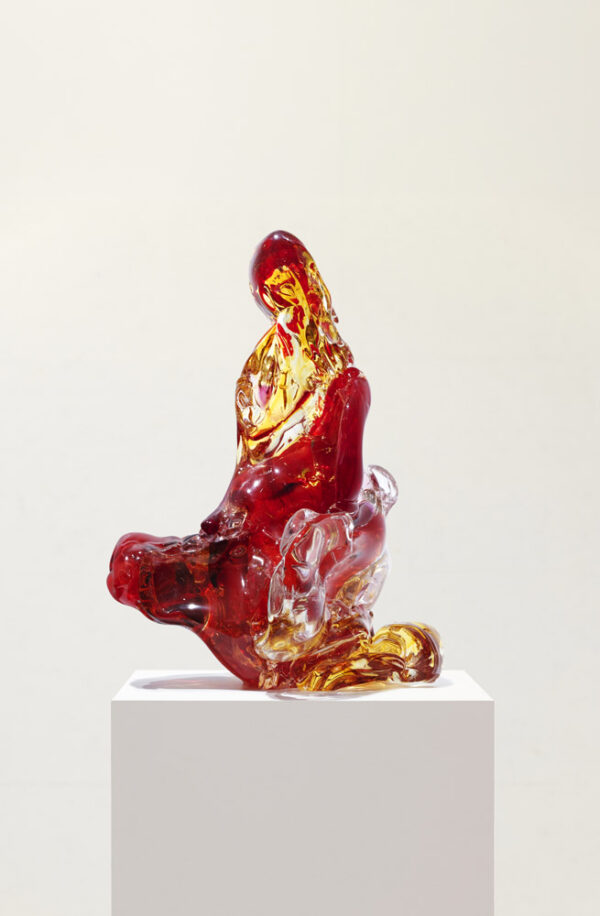
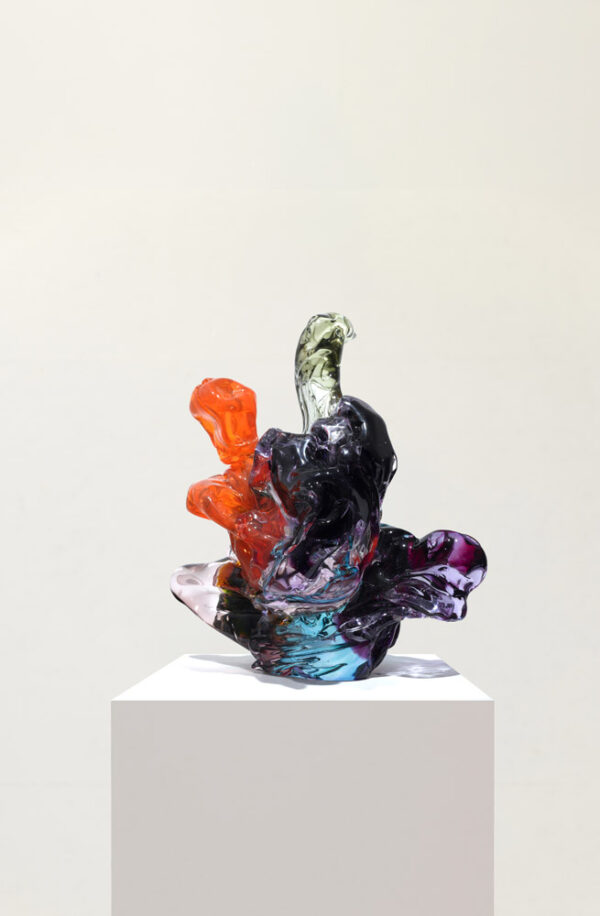
His rich and evolving material vocabulary reflects this belief. He works with elemental metals like phosphor bronze and aluminium to evoke endurance, tension, and raw energy. Monumental ceramics—sculptural forms born of earth, scale, and time—that explore the tactile density of organic growth. At Berengo Studio in Venice, he works with Murano glass masters to shape the most delicate gestures: translucent vessels of light, breath, and bloom. These materials clash and harmonize—brutal clay against fragile glass—embodying the fragile resilience of the ecosystems we continue to threaten.
His garden laboratory, cultivated over more than a decade around his home and studio in Belgium, is both sanctuary and source. It is a place where native wildflowers grow untamed, where biodiversity is studied daily—not to be controlled, but to be understood, absorbed, and celebrated. Every season in this living archive inspires his forms and concepts, translating natural rhythms into works that seek to reconnect rather than isolate. Quinze has undertaken expeditions to some of the most unbridled natural environments on the planet—from remote rainforests to arid plateaus—immersing himself in ecosystems untouched by urban sprawl. These experiences fuel his creative response to the ecological crisis, giving depth and urgency to his belief that nature is the higher power we’ve long sought—a force that can still protect us, if we allow it to thrive.
In his vision of contemporary existence, humans have retreated behind the four walls that shape modern existence: the four walls of the hospital where we are born, the domestic four walls that shelter us, the institutional four walls of school and work, and finally, the four walls of our coffins. These four walls—physical, social, and psychological—may offer protection, but they also isolate. They dull our senses, constrain our instincts, and sever the vital thread that once connected us to the natural world. Quinze’s work aims to fracture the illusion of safety they promise.
The sculptural practice of Arne Quinze is grounded in a deep engagement with nature as both material force and conceptual framework. His works function as biotopes—self-contained sculptural ecologies that reintroduce the vitality and presence of natural processes into increasingly sterile urban environments. Rather than mimicking nature, Quinze constructs forms that embody its dynamism, tension, and equilibrium, positioning sculpture as a mediator between the organic and the constructed, the spontaneous and the controlled.
Quinze translates the complexity of natural systems into form through the interplay of raw power and delicate elegance. He employs diverse materials—handmade Murano glass, clay, ceramics, aluminium, and bronze—each chosen to express a particular aspect of natural energy. Clay anchors the work in primal matter; metal provides structural resilience; glass conveys lightness and transparency. The resulting sculptures materialize contrasts that mirror nature’s harmonious variety.
For Quinze, sculpting is both construction and deconstruction. Through the deliberate addition and removal of material, he gradually peels away obstructions to reveal what he considers nature’s essential “DNA.” Representation gives way to abstraction, until the work expresses the fundamental balance
between untamed energy and refined grace.
Ultimately, Quinze seeks to reveal the purity of nature—not as idealized imagery, but as a structural principle embedded in matter itself.
The oil paintings of Arne Quinze constitute a deeply personal practice of observation and remembrance, grounded in an intimate engagement with the natural world. Working in the quiet of his studio, Quinze employs paint not merely as a representational tool but as a means of penetrating the inner architecture
of nature—its raw mechanics of growth, its singular and unrepeatable forms, and its inexhaustible spectrum of color. Although he frequently depicts hedges, hanging trees, and wildflowers, these motifs are rarely treated as botanical studies. Rather, his compositions seek to evoke the aura and presence of
his subjects, rendering their emotional and existential weight instead of their mere outward appearance. Surrounding his atelier, his wildflower garden functions as a living biotope—a site of sustained research where, across seasons and years, he observes and translates nature’s subtle rhythms and dynamic
contrasts onto canvas with the attentiveness of a gardener.
Within this practice, painting becomes an act of archiving and treasuring, imbued with urgency by the dramatic loss of global biodiversity—more than seventy percent within his lifetime. Quinze does not idealize nature; instead, he strives to capture what may soon vanish. Each canvas stages a close encounter with the resilience and delicacy of the natural world, exploring the charged dialogue between raw strength and fragile, almost divine beauty. The splendor, tension, and elemental vitality of diverse organic forms emerge as the central truths he seeks to preserve—gestures of remembrance that may
stand, ultimately, as testimony to a world in peril.
His deeply personal sound and video works further explore the four walls, both literal and metaphorical, that have come to define human life. Arne Quinze, who himself lives within these same four walls, acknowledges this duality—but he resists it. These works do not seek to escape the four walls, but to
rupture them.
Quinze invites us to step beyond our constructed enclosures—not into chaos, but into reconnection. Into awe. His works do not aestheticize nature—they reawaken it as the untamed, vital force from which we must learn again if we are to survive. The four walls will not protect us forever. But nature might—if we let her in.
Arne Quinze resists that severance. Through every material, form, and gesture, his art calls for a reawakening of awe—an instinctive reverence for the wild systems that once shaped us, and still could. His practice is not an escape into nature—it is a reinstallation of its power in our lives. A challenge to
imagine new urban rituals, new aesthetics of coexistence. And ultimately, a vision for survival—not through domination, but through deep, enduring harmony with diversity.
Over the past three decades, Arne Quinze has become a well-established figure on the international contemporary art scene, with large-scale immersive installations, public sculptures, and solo exhibitions shown in major museums, galleries, and cultural institutions worldwide. His works can be found in
prominent collections and urban landscapes across Europe, Asia, the Americas, and the Middle East—each piece offering a site-specific dialogue with its environment, and a call to see, feel, and think differently.